
Iron County Arrest Warrants Explained
An arrest warrant is a court order. It directs a peace officer to take the accused into custody and bring that person before a magistrate without unnecessary delay. Michigan's Code of Criminal Procedure demands a complaint first, plus a judicial finding of reasonable cause. So the warrant is a judge's decision. Police never issue one. Most Iron County cases follow a familiar track. Misdemeanor, ordinance, and traffic matters stay in the 95B-2 District Court, while felony cases move to the 41st Circuit Court after bind-over.
How Complaints Become Iron County Warrants
Every Iron County warrant starts as paperwork. An officer or a prosecutor drafts a complaint stating the accusation and the supporting facts. A judge or magistrate reviews it. If the legal standard is met, the warrant issues. From there the order enters the court file and the law-enforcement systems that carry it to the officers who will serve it. Each stage leaves a record with a different office in Iron County. The complaint and warrant live in the court file; service information lives with the serving agency. Neither produces a public list. Note: MCL 764.1c governs issuance or endorsement when the accused is already in custody.
Inside an Iron County Arrest Warrant
Iron County publishes no warrant schema, so confirm each entry with the issuing court or the sheriff. Here is what a record should carry.
| Warrant or process number | Assigned by the court when it issues the order; the local format is not published |
|---|---|
| Case number | The docket identifier, such as 2025-001234-FH |
| Charge | The offense, with a statute or ordinance reference and a felony or misdemeanor classification |
| Issuance | The complaint, the probable-cause finding, and the issuing judge or magistrate |
| Bond | Amount and type when the court set release terms, or special conditions |
| Service | The agency that entered or served the warrant, with a return entry when public |
| Status | Active, served, recalled, quashed, returned, or cleared |
Iron County Warrant Path: District to Circuit
The file moves as the case moves. District court handles the complaint, the arraignment, bail, and the preliminary examination. If the case is bound over, the circuit court takes the trial-level case and the county clerk keeps that file. That handoff trips people up in Iron County. A caller asking the district clerk about a bound-over felony gets sent to Suite 9. A misdemeanor question there bounces back.
Serving Arrest Warrants in Iron County
The sheriff handles service countywide. In Iron County, that means custody questions go there too, while city police handle matters their own officers started. The county posts no service map. Confirm the serving agency with the sheriff. State police warrant maintenance sits with regional communications centers, one reason a multiagency warrant may not appear in a county record.
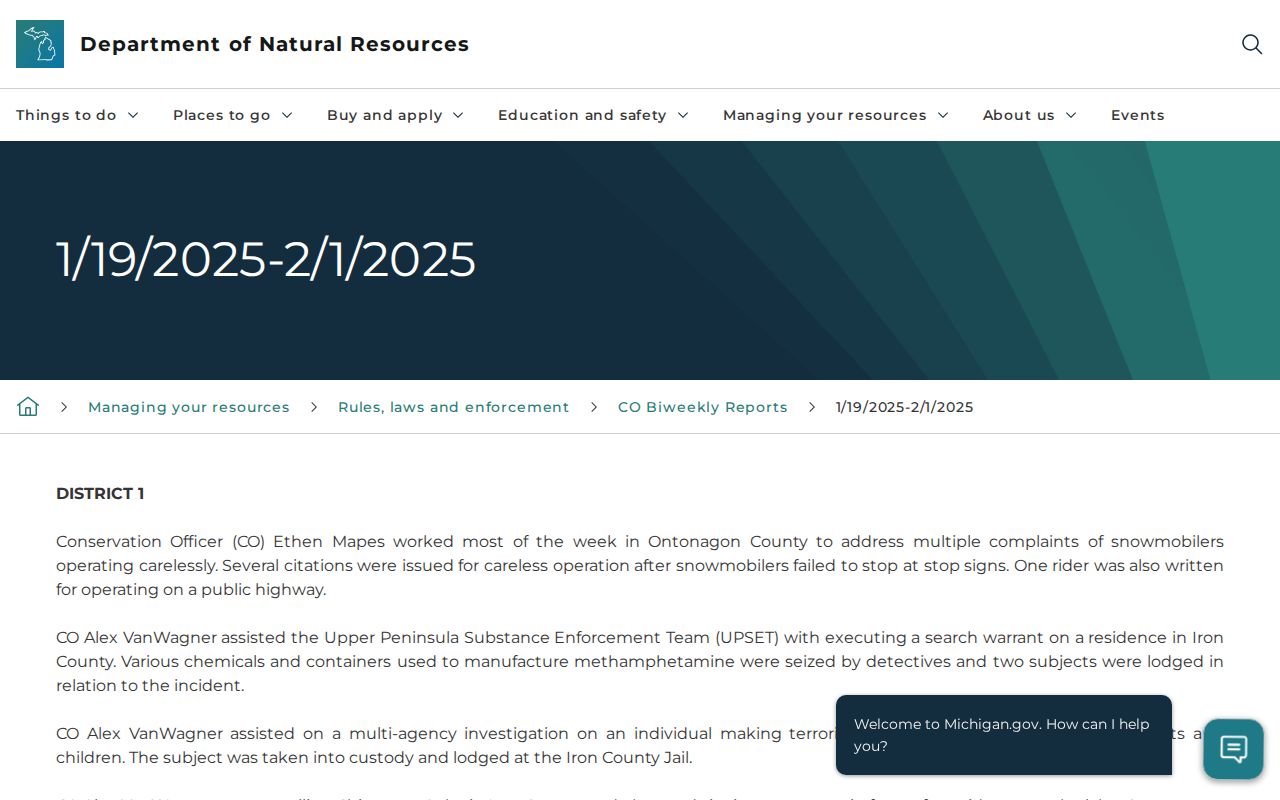
A dated state agency report documents an Iron County search warrant carried out with local and state partners. Service can involve more than one agency that way. But that example is a search warrant, not an arrest warrant. The two records travel different paths.
Iron County Warrant Bond at the Magistrate
Start with the magistrate's office. In Iron County, that office handles probable-cause findings, arraignments, and bond questions within its authority. It is listed in Suite 6. It lists morning hours. The county posts no bond schedule, payment method, bond window, or walk-through procedure. Michigan's release framework starts with personal recognizance or an unsecured bond unless the court finds that conditions or money bail are needed. Cash and surety options exist as well. In Iron County, the judge's order sets the terms, not a county chart. Note: Ask the court for the warrant number, case number, bond amount, and bond type before sending money to anyone.
Comparing Arrest, Summons, and Bench Warrants
Three processes can put a person before a judge. In Iron County, only two of them begin with arrest authority.
| Point | Arrest Warrant | Summons | Bench Warrant |
|---|---|---|---|
| Origin | A complaint and probable cause | A charge filed with a notice to appear | A missed obligation in an open case |
| Arrest authority | Yes, custody is authorized | No, appearance is directed | Yes, after the court issues it |
| First step | Court record, then an attorney | Appear on the date listed | Call the clerk who holds the file |
Sealed Iron County Warrants and Unserved Orders
A warrant can exist yet stay hidden. A sealed indictment, a protected case type, or an investigation exemption can each keep an Iron County record out of view until an arrest or another event occurs. A blank search proves nothing here.
Key Point: an unserved warrant does not have to appear in any public roster, and the law-enforcement record may be withheld while the matter is active. Absence from a search is not an answer.
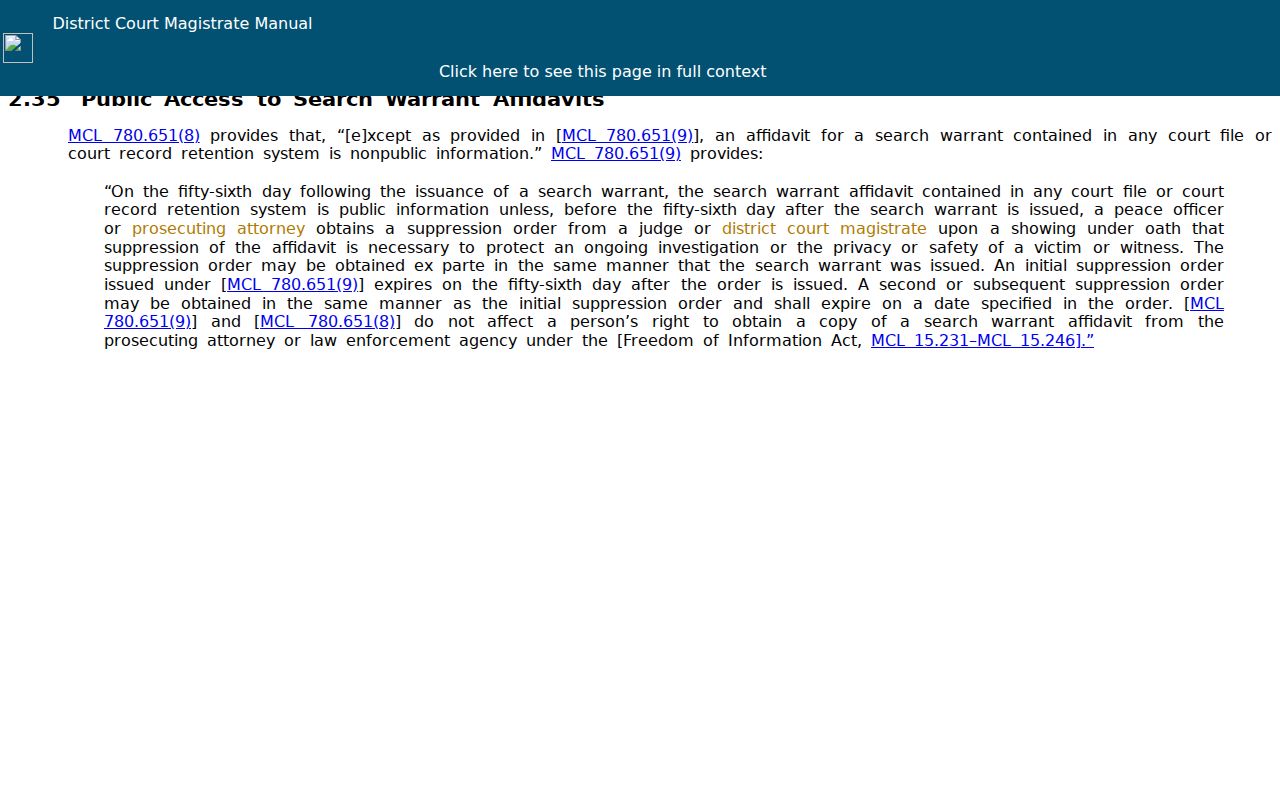
Official court guidance on search-warrant affidavit access says these affidavits ordinarily become public later, unless suppression is granted. Timing depends on the court, not the reader. The same logic applies to arrest records. An Iron County file may open on a schedule unrelated to when the warrant was signed.
If There's an Arrest Warrant for You
Choosing your moment beats a traffic stop. Michigan lets a person named in a bench or arrest warrant present voluntarily at the issuing court within a year of issuance. That rule applies in Iron County too. Arraignment generally comes within two hours if it can. If not, it recalls the warrant and sets a future date. Assaultive crimes, domestic violence, and a prior use of the rule are exceptions.
Act deliberately: contact an attorney, confirm the warrant and bond terms with the issuing court, and call the sheriff before turning yourself in so custody and transport questions are answered first.
Voluntary Appearance on an Iron County Warrant
Turning yourself in on an Iron County warrant is a court process, not a courtesy. Call the issuing court first. Ask whether it wants a scheduled appearance, an attorney-arranged walk-through, or a written request, and ask what identification to bring. Also confirm whether the jail, not the court, handles booking that day. If a case number exists, bring it. Come during published hours, keep every piece of paperwork, and remember that a felony file sits with the county clerk, not the district clerk.
Iron County Warrants and Federal PACER
Iron County belongs to the Northern Division of the Western District of Michigan. That division's courthouse sits in Marquette. Federal warrants issue through a federal complaint or indictment, and the U.S. Marshals Service or federal agents serve them.
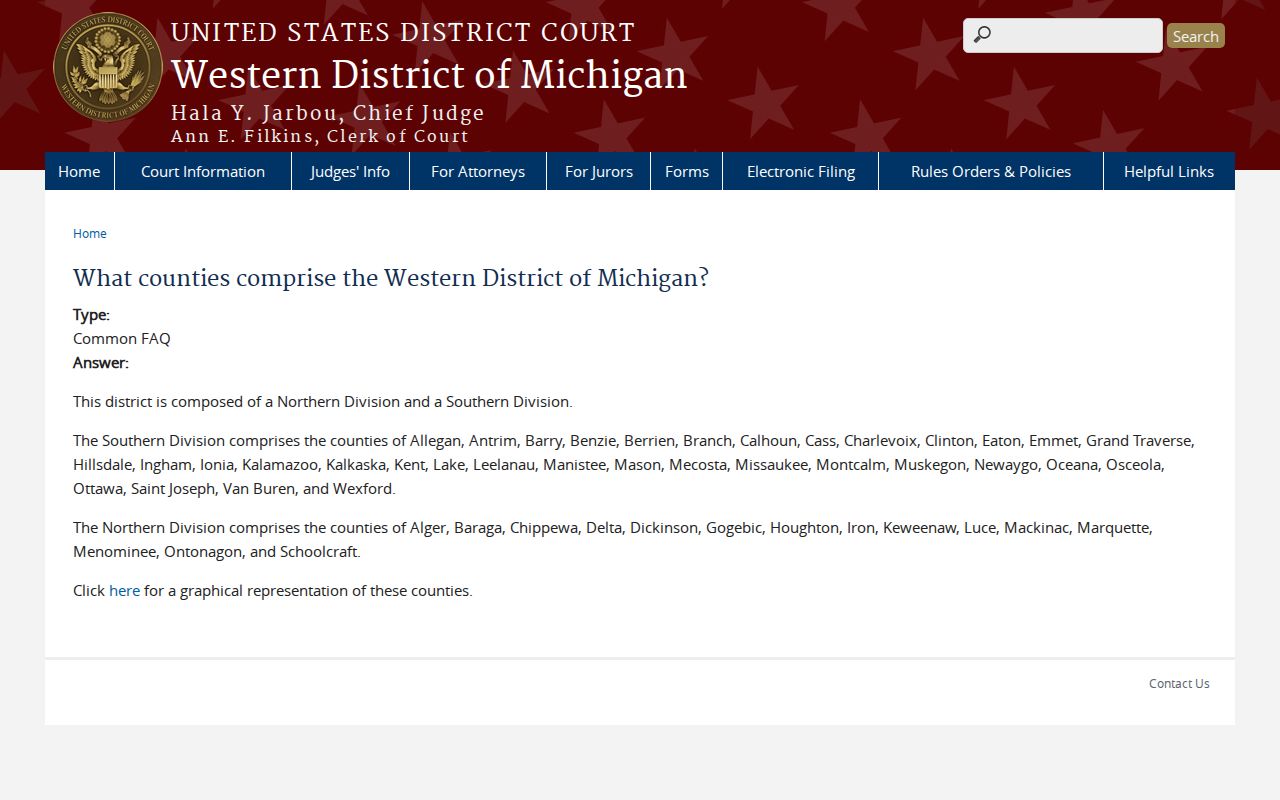
The federal court jurisdiction page lists Iron County in the Northern Division. That one geographic fact decides where a federal matter would be heard. Federal dockets are searchable through PACER pricing is per page, though fees are waived for low quarterly usage. Wait, that link belongs here: dockets can be searched through PACER. Even so, a federal warrant may be sealed and absent from the public docket.
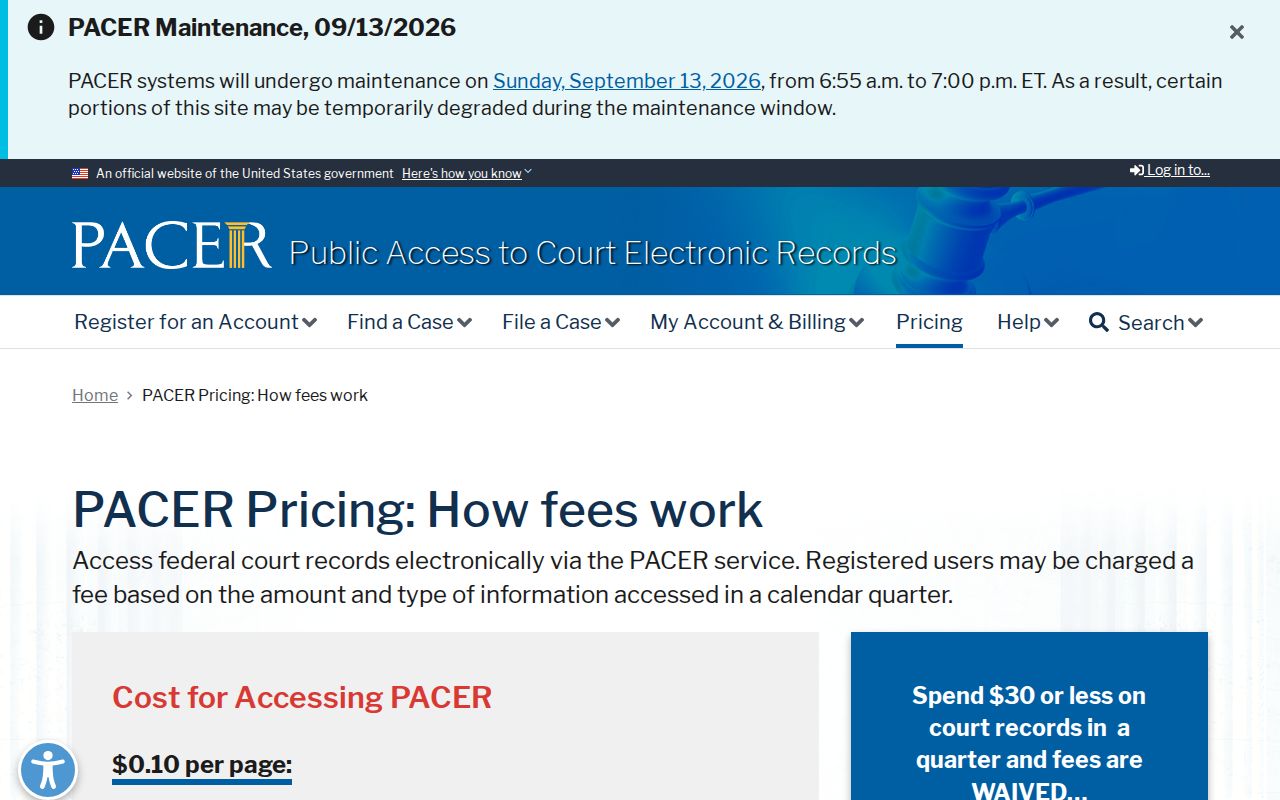
PACER is a docket service, not a warrant check. A state court clerk cannot recall another jurisdiction's warrant, so a federal question belongs with federal counsel and the Marquette court. A county ticket will not resolve a federal matter. A federal docket search will not answer a state warrant question either.